The dance floor is one of my favorite parts of a wedding reception to photograph. There is something about a packed dance floor that can’t really be recreated or posed. People are laughing, moving, jumping, dancing, and celebrating together. The energy is completely different from the rest of the wedding day.
While photographing wedding receptions throughout Boston, Massachusetts, and New England, I sometimes use a technique that exaggerates that energy: a slow shutter speed combined with flash and intentional camera movement.
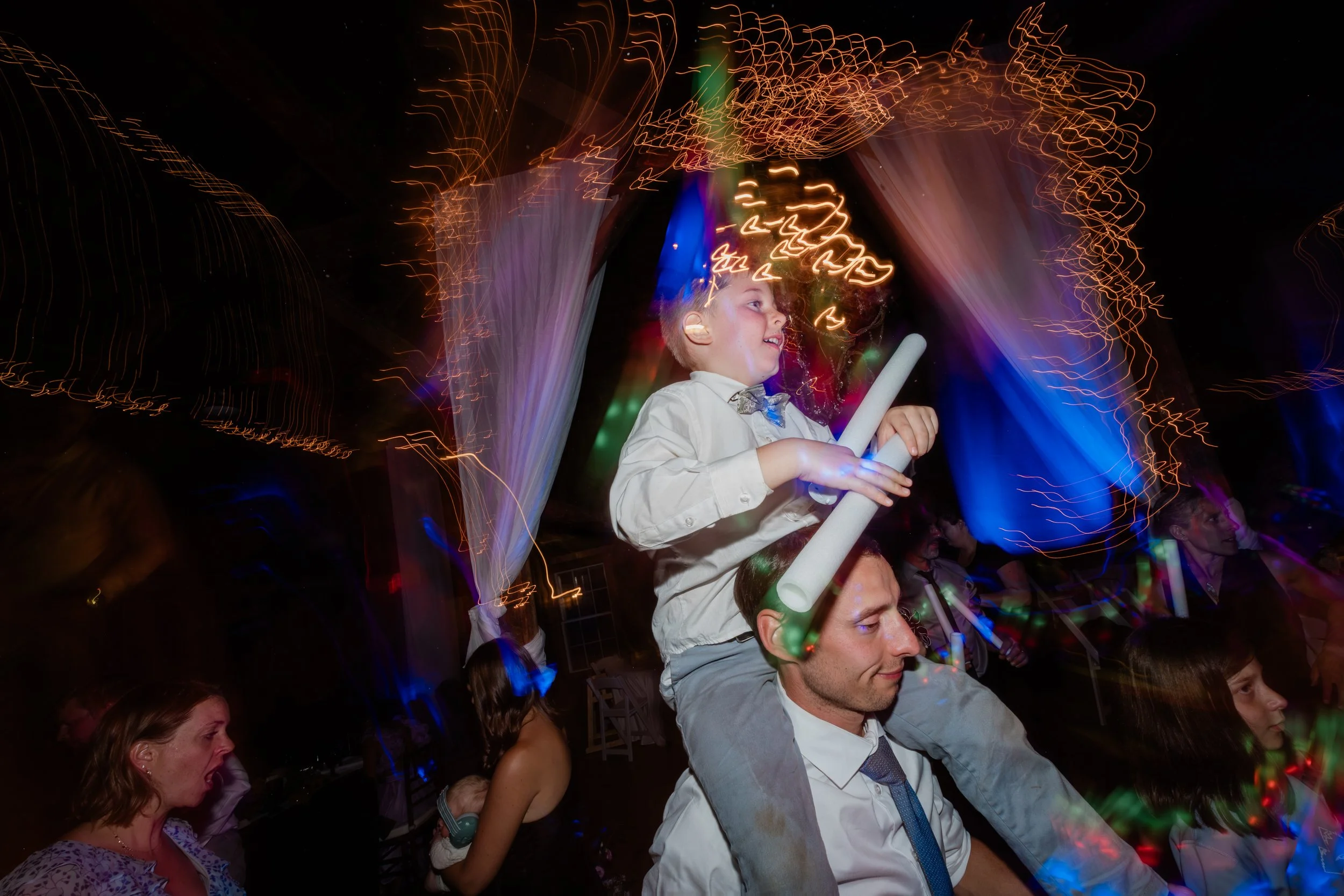
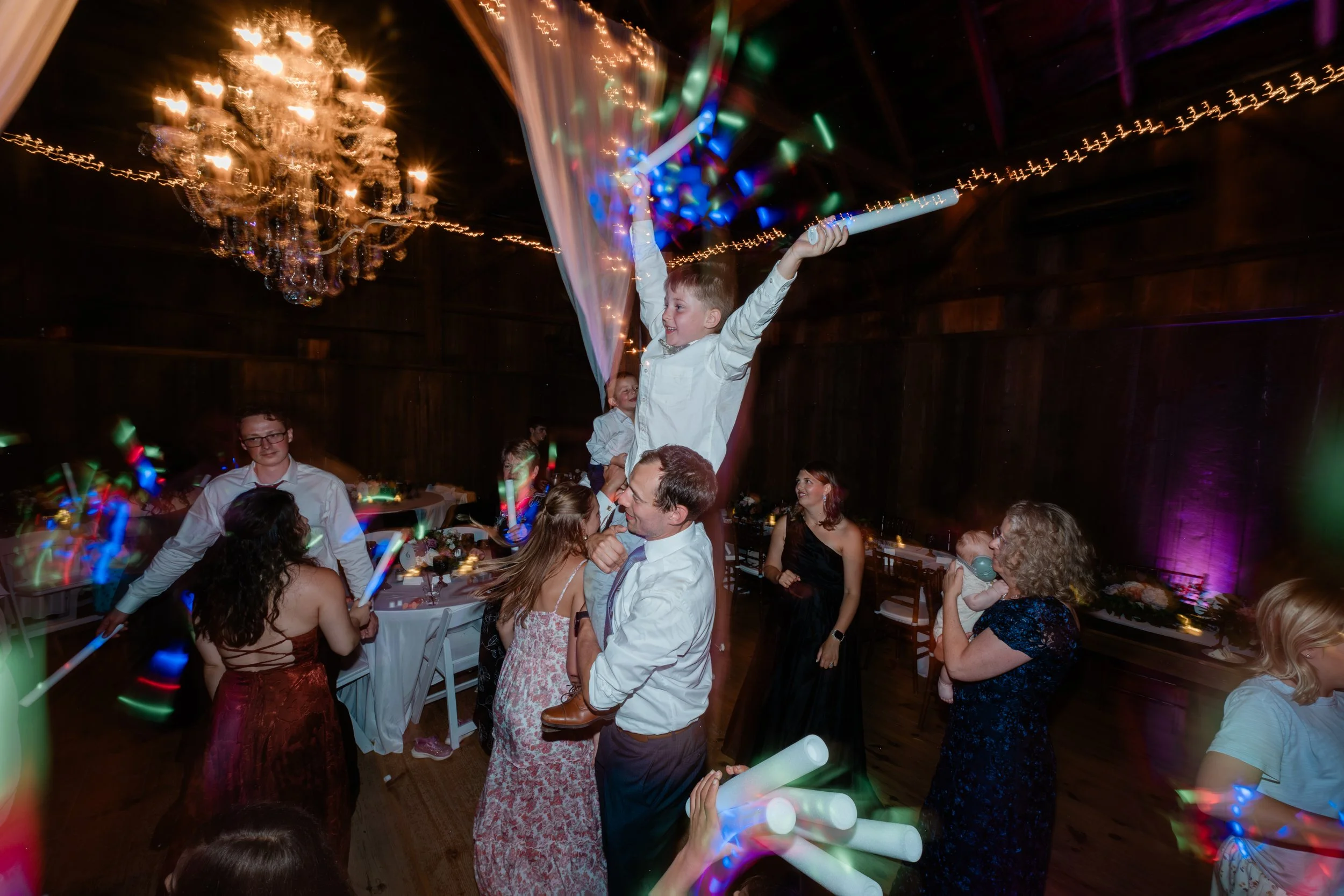
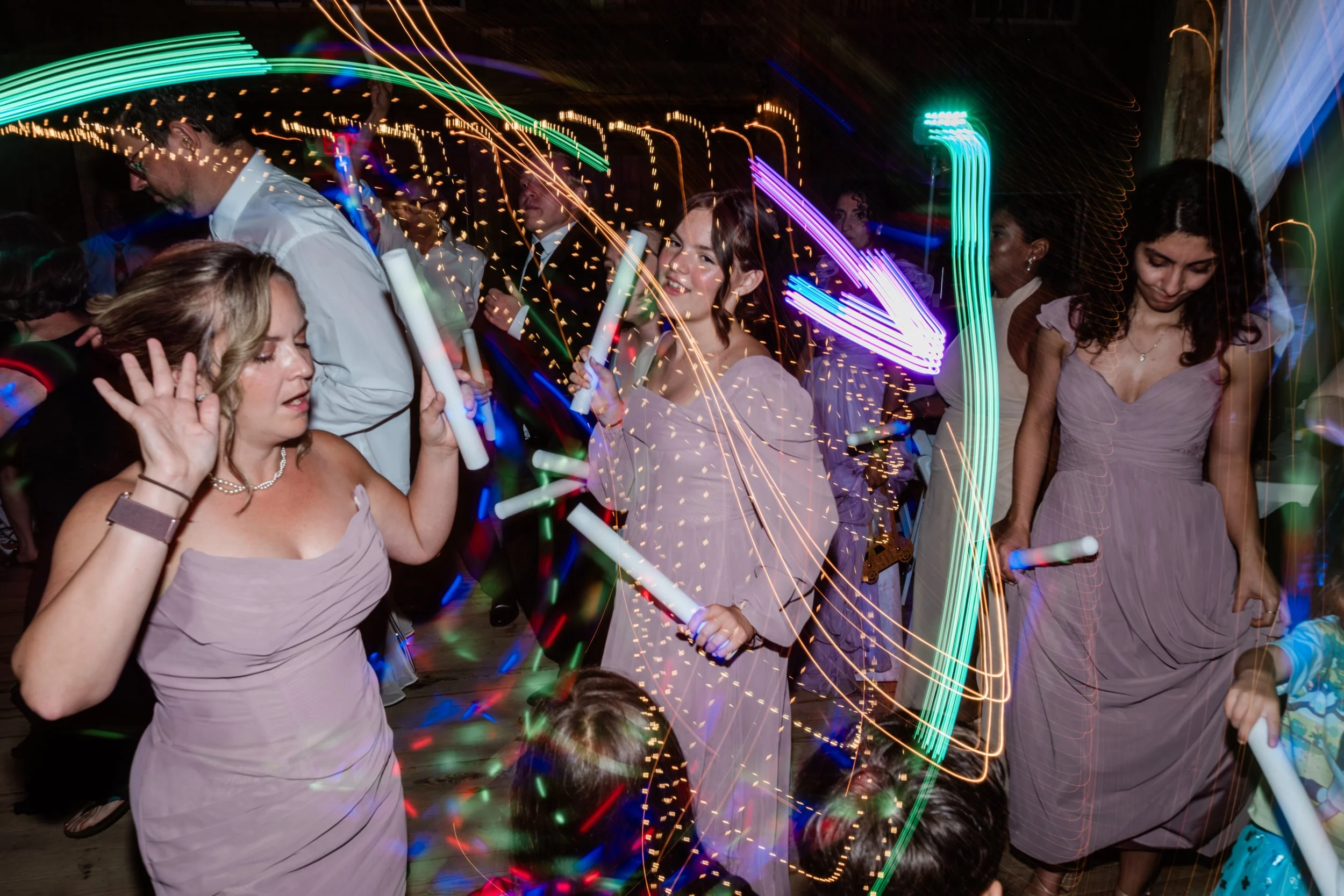
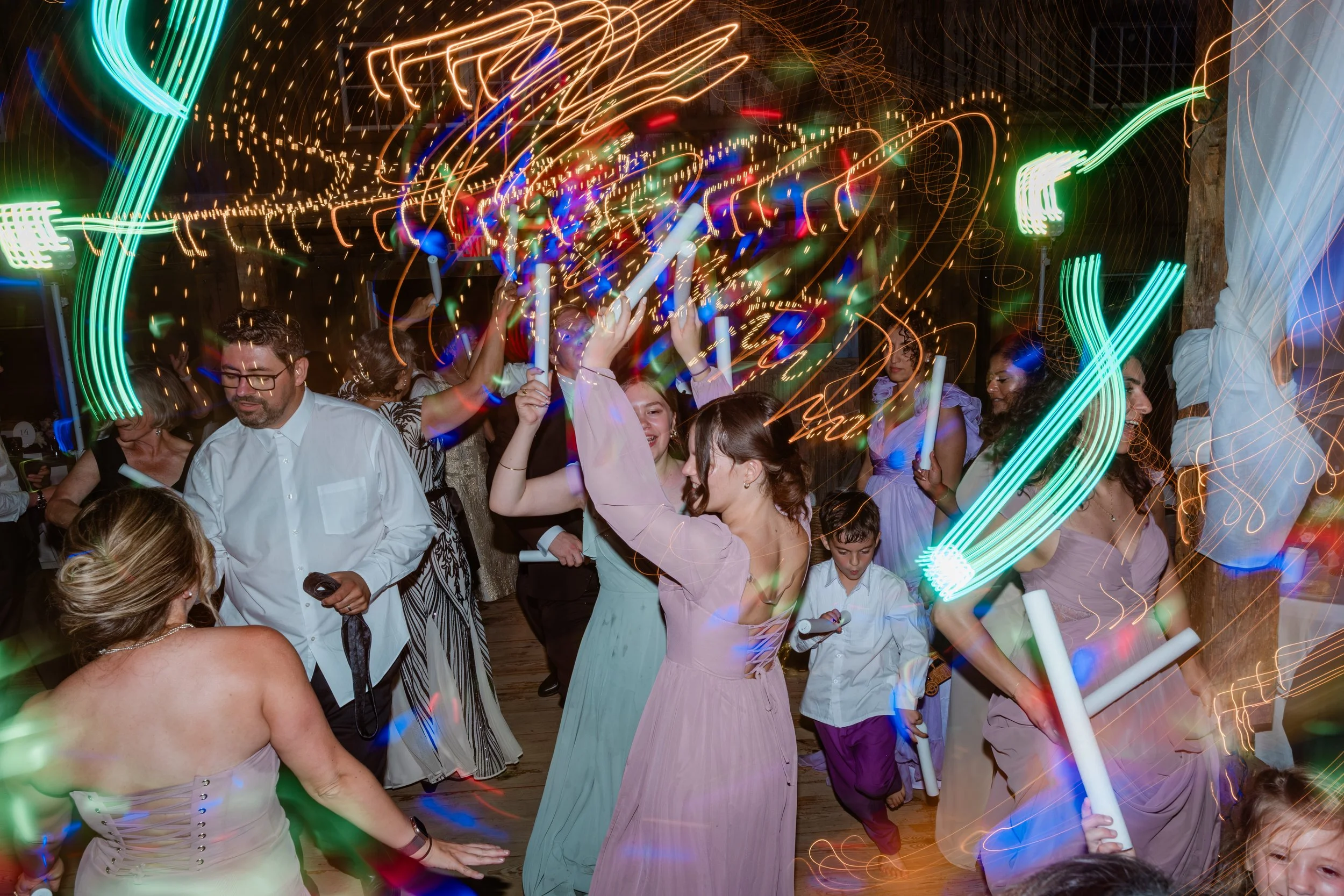
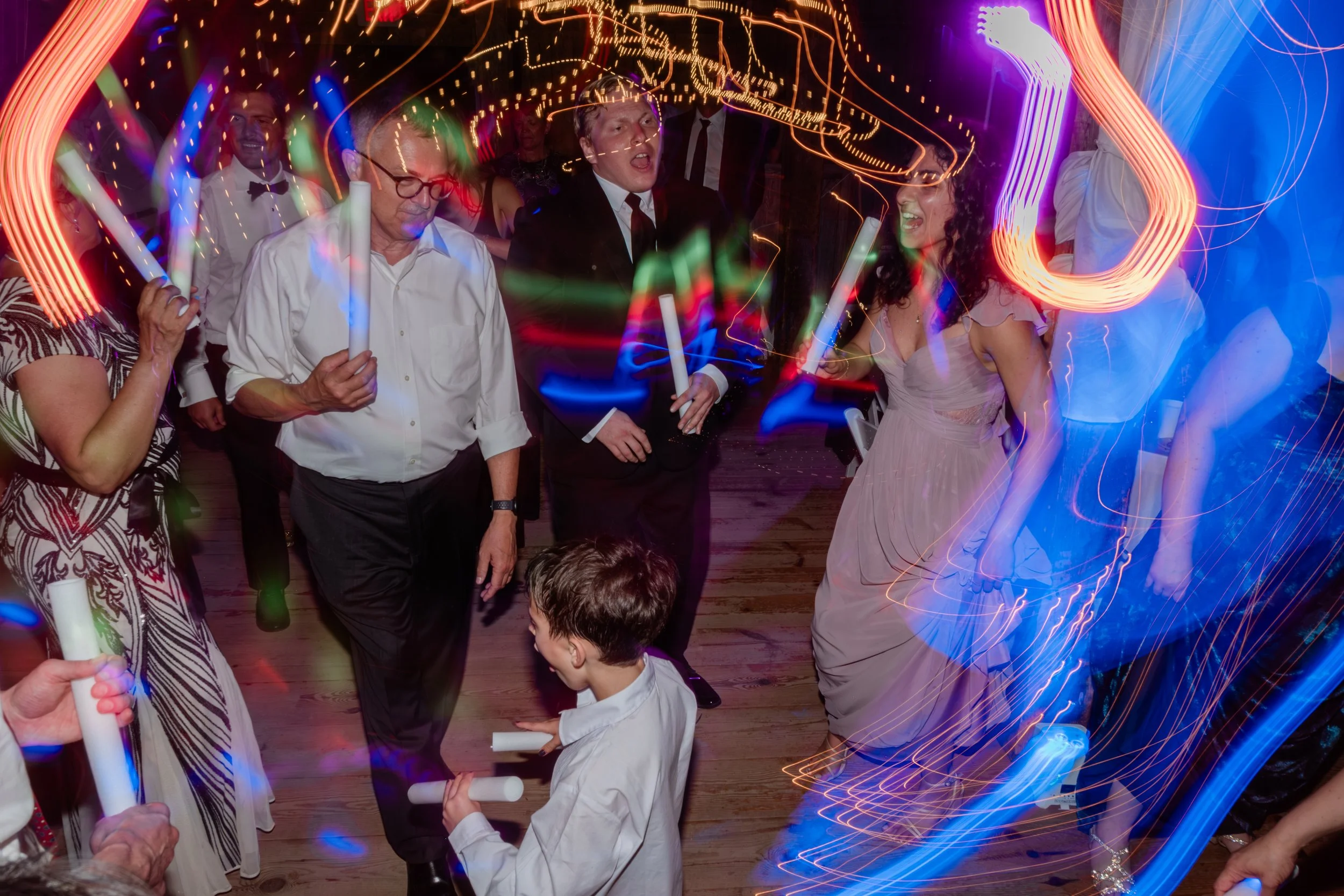
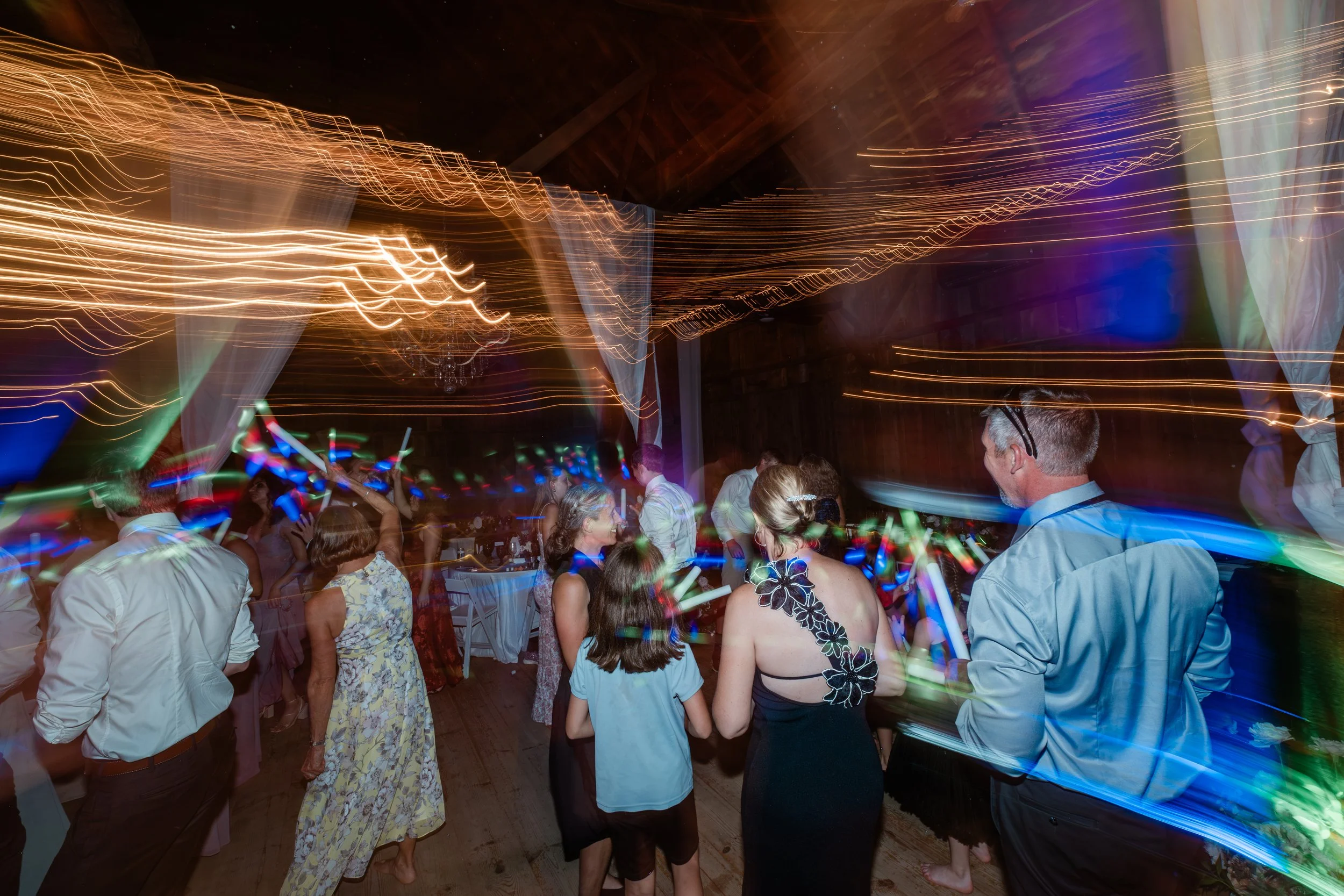
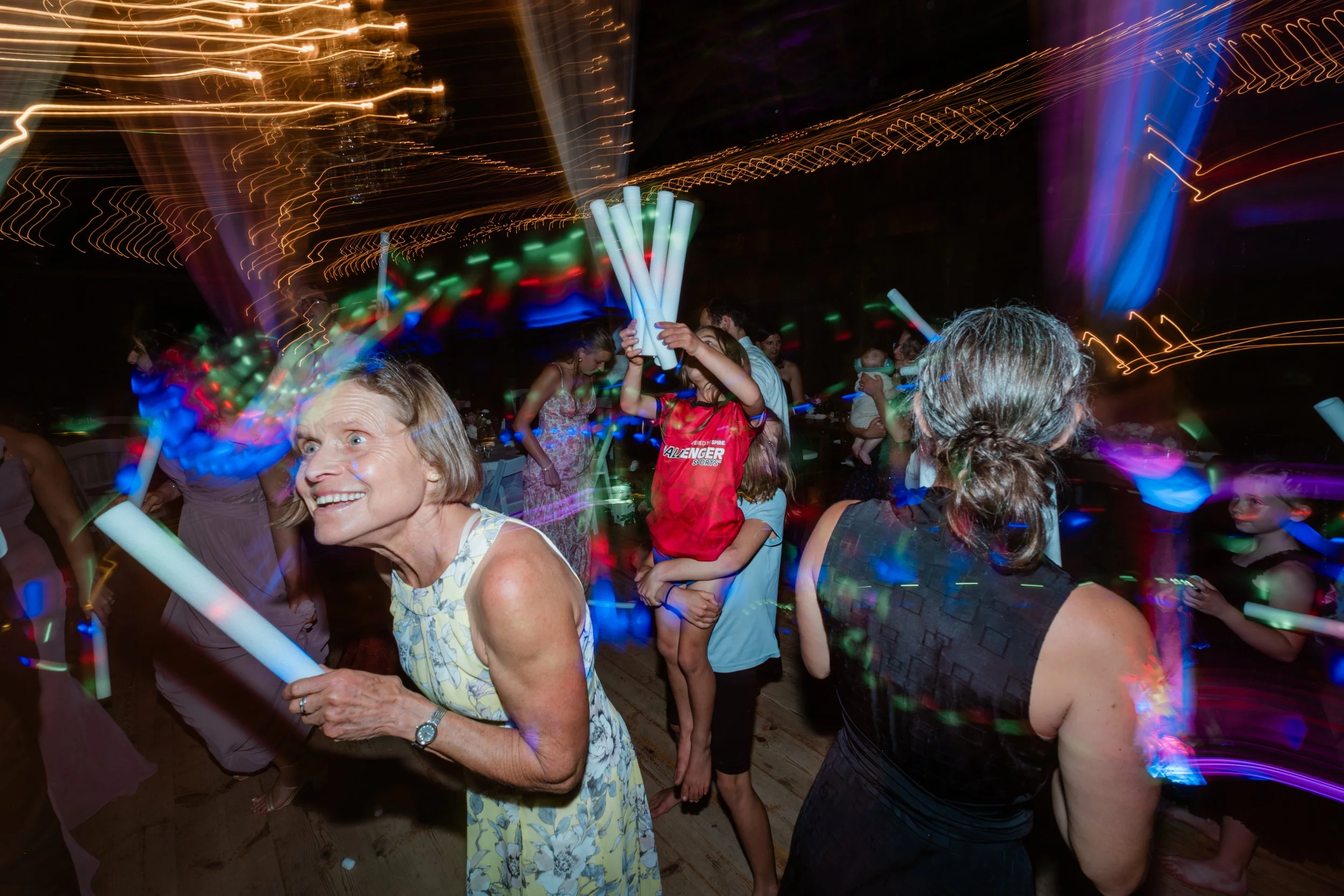
The result is a photograph that captures both the person and the movement happening around them.
Why I Use a Slow Shutter Speed on the Dance Floor
When photographing a typical dance floor, I could simply use a fast shutter speed and flash to freeze the action. And I often do this throughout the dancing portion of the night. But a fast shutter speed doesn’t always communicate how energetic the dance floor actually felt. Using a slower shutter speed allows the ambient light in the reception space to create streaks and trails throughout the photograph. The lights might stretch across the frame. A person’s movement might create a subtle blur. And when I intentionally move the camera during the exposure, the lights can form interesting patterns around the subject. The result is an image that feels like movement. It doesn’t just show you what the dance floor looked like. It gives you a sense of what it felt like to be standing in the middle of it.
Why I Use Front Curtain Sync
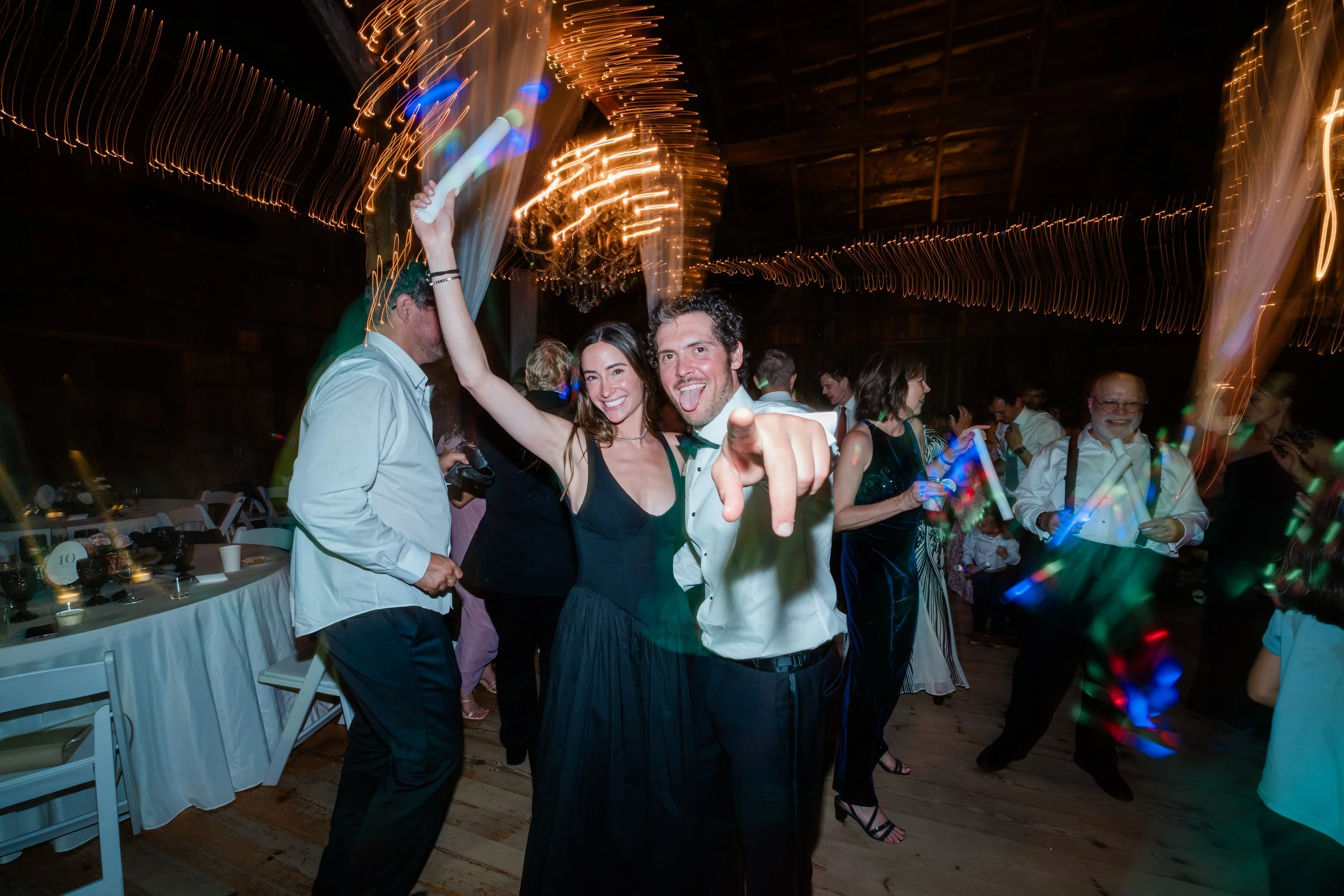
Flash synchronization is an important part of creating these photographs. With front curtain sync, the flash fires at the beginning of the exposure. That gives me more control over exactly when the subject is frozen. That matters because a slow shutter speed creates a window of time in which movement and ambient light can be recorded. I can watch the action, anticipate a particular expression or movement, and trigger the flash at the moment I want to capture. I’m not simply hoping that the right moment happens somewhere during the exposure. I’m making a decision about the moment I want the photograph to describe. After the flash fires, I may add a quick movement of the camera before the exposure ends. That movement creates the streaks and patterns from the lights in the room. The technique becomes a combination of timing, movement, ambient light, and flash.
What About Rear Curtain Sync?
Rear curtain sync can also be used to create motion trails with flash, but the timing feels different. With rear curtain sync, the flash fires at the end of the exposure. That can make capturing a very specific expression or instant more of a guessing game because the subject’s final position is happening at the end of the exposure.
For the way I like to photograph a busy dance floor, I prefer having the flash fire at the beginning. Front curtain sync gives me the ability to see the moment developing and choose when I want to freeze it. It is one small technical choice, but it makes a difference in how much control I have over the final photograph.
I Don’t Photograph the Entire Dance Floor This Way
This is important. I don’t photograph an entire reception using slow shutter speeds and light trails. If I did, the technique would quickly become repetitive. Instead, I use it selectively. I’ll photograph the dance floor normally for much of the reception, capturing expressions, interactions, hugs, movement, and all of the spontaneous moments happening throughout the room. Then, when the energy calls for something different, I’ll sprinkle in a few of these slower-shutter images. That’s what makes them special. They become part of the visual story rather than the entire story.
Why These Photos Work at a Wedding
Wedding photography should show more than what people looked like. It should help you remember what the room felt like. A photograph with light trails and intentional motion can communicate something that a perfectly frozen photograph sometimes can’t. You can almost feel the music. You can see the movement. You can feel the energy of your friends and family surrounding you. That’s what I love about experimenting with techniques like this. The technique isn’t the point. The experience is.
Technical Skill Should Serve the Story
My background in photojournalism has strongly influenced how I approach weddings. I’m always watching what is happening and looking for moments that tell the story of the day. But being documentary-minded doesn’t mean I limit myself to one photographic technique. I love natural light, but I’ll use flash when it helps create a better photograph. I’ll photograph genuine moments as they happen, but I’ll also create more intentional environmental portraits when the situation calls for them. And on the dance floor, I’ll sometimes slow the shutter down and intentionally move the camera to create something completely different.
The goal is always the same: Create photographs that bring you back to the experience.
Wedding Reception Photography in Boston and New England
When I photograph weddings in Boston, throughout Massachusetts, and across New England, I want the final gallery to feel like a complete representation of the day. That means beautiful portraits. Emotional moments. Family photographs. Details that help establish the setting. And photographs that capture the energy of the celebration itself. Sometimes that means a clean, perfectly timed photograph. Sometimes it means a little motion. Sometimes it means flash. Sometimes it means natural light. The best tool depends on the moment. And that’s why I don’t believe wedding photography should be limited to a single look or technique.
Your wedding isn’t one-dimensional. Your photographs shouldn’t be either.
Final Thoughts
These slow-shutter dance floor photographs are just one small part of how I approach a wedding.I use them because they can capture something that a traditional photograph can’t always communicate: the speed, movement, excitement, and energy of a packed dance floor. But I use them selectively. The goal isn’t to create a gallery full of the same effect. It’s to recognize when a particular technique can make a moment more meaningful. That’s ultimately what I want from your wedding photographs. Years from now, I want you to look through your gallery and not just remember what your wedding looked like. I want you to remember how it felt.
If you’re planning a wedding in Boston, Massachusetts, or anywhere in New England and are looking for wedding photography that combines honest storytelling with thoughtful, creative imagery, I’d love to hear about your plans.